Daily Brief
OpenAI Just Bought Your Python Toolchain
OpenAI isn't building a coding tool anymore. Spoiler alert: it's buying the stack.
OpenAI announced this morning it's acquiring Astral, the company behind Ruff, uv, and ty.
If you write Python, you've used at least one of these. Ruff alone handles linting and formatting for a huge chunk of the Python ecosystem. Combined, Astral's tools see hundreds of millions of downloads per month.
The deal folds Astral into OpenAI's Codex team, which has quietly become one of the fastest-growing products in AI. Codex hit 2 million weekly active users and saw 5x usage growth since January.
This edition breaks down what the acquisition actually signals, what it means beyond engineering, and what the rest of the week looked like. Pentagon vs. Anthropic, Samsung's $73B bet, and Google’s latest push.
Let's get into it.

OpenAI Is Buying the Stack
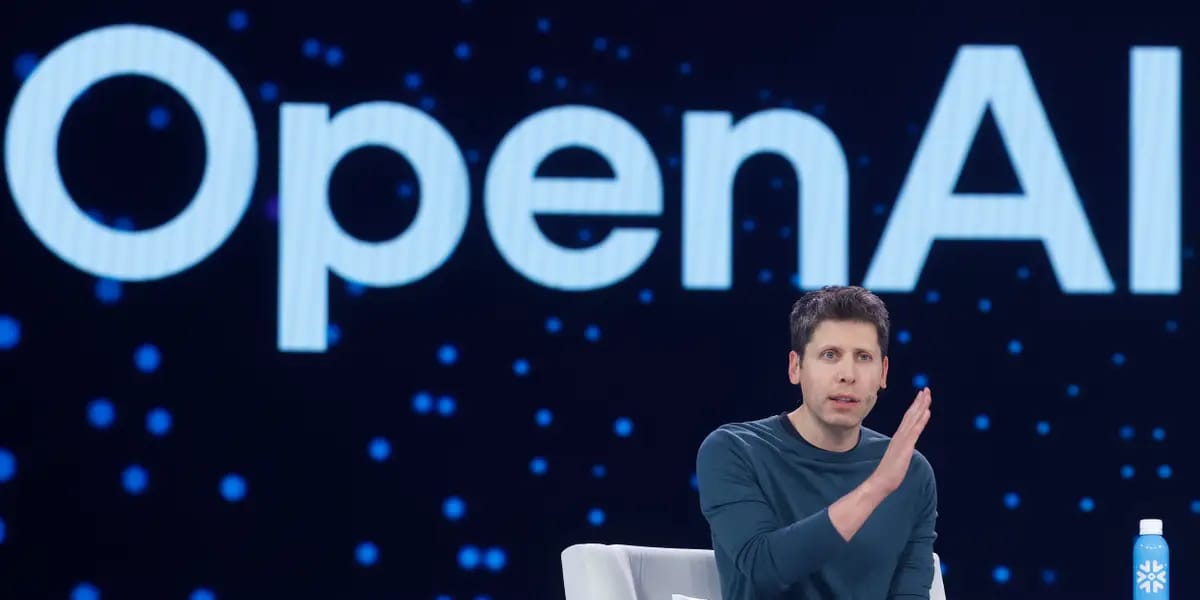
OpenAI is moving behind the scenes of a chatbot that just generates code.
They're buying the infrastructure that developers already depend on — the linter, the package manager, the type checker — and wiring it into an AI agent that can plan changes, run tools, verify results, and maintain software over time.
Charlie Marsh, Astral's founder, framed it as "pushing the frontier of software development." Thibault Sottiaux from OpenAI was more direct: they want Codex to be "the agent most capable of working across the entire software developer lifecycle."
Here are a few things to note:
This is an acquisition strategy we're going to see more of. Don't build tools from scratch. Buy the ones developers already trust. Then make your AI agent the one running them. OpenAI just demonstrated this playbook.
The Codex numbers are not a side story. 2 million weekly active users. 5x growth since January. That's a product finding its market. The Astral acquisition is OpenAI doubling down on a bet that's already paying off.
The real question is what happens on the non-engineering side. OpenAI is consolidating coding. But most of the work at most companies isn't coding. It's customer support, operations, sales research, onboarding, reporting — the stuff that eats headcount but doesn't ship product. The same pattern applies: AI agents that own entire workflows, not just individual tasks. The companies that figure out agent deployment for the non-engineering side of the house are going to have a serious edge. The ones that wait are going to wonder why their competitors seem to have twice the team at half the cost.
What This Means For You:
If you're a CTO or VP of Engineering, the question isn't whether AI will change your development workflow anymore. That, it already has. The question is how fast the rest of the org catches up.
The Astral acquisition is a signal about where the value in AI is moving. Not models. Not chatbots. Infrastructure. The layer that sits underneath everything else, that developers already depend on, that's hard to rip out once it's in.
Whatever your industry, ask yourself: who is buying the infrastructure your team already depends on? And what does your workflow look like when they wire an AI agent into it?
Clutch. Just launched.
OpenClaw made it easy to get an agent running. Clutch makes it safe to run that agent at work. It's a secure deployment platform for AI agents - the kind that handle real business workflows, not just code generation. Four-container isolation, multi-tenant team management, fleet-level oversight.
If you're thinking about deploying AI agents beyond engineering, this is the infrastructure layer you need. We launched this week.


The Pentagon is slow-rolling Hegseth's order to dump Claude
Defense staff, contractors, and IT teams are dragging their feet on the six-month Anthropic phase-out — because Claude is embedded too deeply to rip out fast. Palantir alone has to rebuild parts of Maven Smart Systems. One federal CIO is betting the ban gets reversed before the deadline hits.Samsung commits $73 billion to AI chip expansion.
Samsung is increasing production and research investment by 22% in 2026, targeting Nvidia's memory supply chain. Co-CEO Jun Young-hyun pointed to agentic AI demand as the driver — not chatbots, not image generation, but autonomous agents that need serious compute.Google wants you to "vibe design" now.
After vibe coding took over the developer world, Google is pushing "vibe design" through updates to Stitch, its AI tool for UI design. New voice capabilities let you talk through interface changes.

The Astral acquisition is the kind of move that looks obvious in hindsight.
Of course, you buy the tools developers already use. Of course, you make your agent the one running them. The infrastructure play is always more defensible than the application layer.
What I keep thinking about is the non-engineering version of this. Every company has workflows that run on tools people already depend on — spreadsheets, CRMs, support queues, and reporting dashboards. The acquisition strategy works there, too. The question is whether you're thinking about it before someone else buys the infrastructure underneath you.
Haroon
PS - If the Astral move got you thinking about agent deployment beyond engineering, that's exactly the problem Clutch was built for.